
Black Basset Hound: Colors, Coat Genetics, Temperament, and Care
Search for a “black Basset Hound” and you will find striking photos of dark, glossy hounds with long ears and soulful eyes. You will also find plenty of confusion. Do solid black Bassets exist? Are they rare? Do they cost more? Do they behave differently from other Bassets?
This guide separates fact from marketing. It covers what black coloring in a Basset Hound really means, how coat color works genetically, what to watch for when buying a puppy advertised as “black,” and how to care for a dark-coated hound. Four frequently asked questions and a conclusion at the end will help you decide.
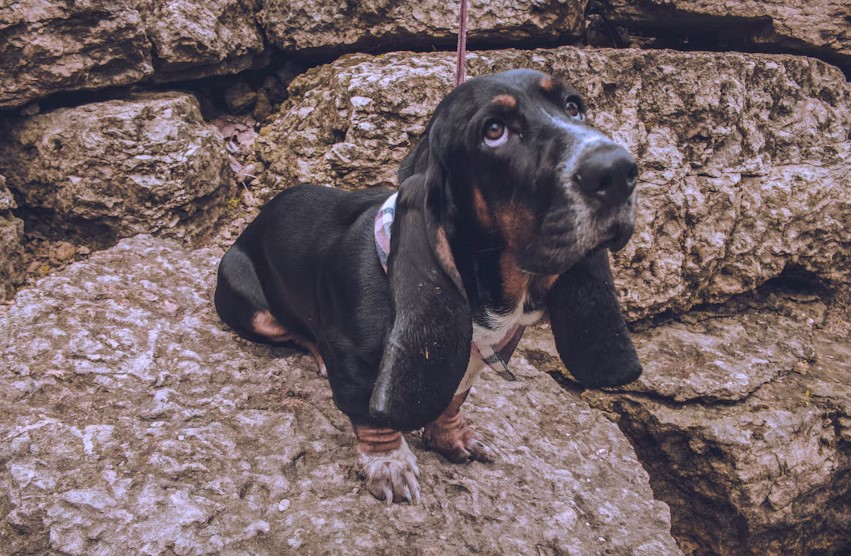
Do Black Basset Hounds Really Exist?
This is the first question to answer, and the answer is nuanced. The Basset Hound breed standard accepts any recognized hound color, and the most common patterns are:
- Tricolor: black, white, and tan, often with a dark saddle on the back
- Red and white
- Lemon and white
- Brown and white or other combinations
True solid black Bassets, with no white or tan anywhere, are extremely uncommon. Most dogs described as “black Basset Hounds” fall into one of these categories:
- Black-dominant tricolors. These have a large black saddle or blanket across the back and sides, with tan on the cheeks, eyebrows, and legs, and white on the chest, feet, and muzzle. This is the most common type of dark Basset.
- Black and white Bassets. These have black patches on white, without prominent tan markings. They are less common than classic tricolors.
- Black and tan Bassets. Dark bodies with tan points. Also uncommon.
- Mixed-breed dogs. A dog with a mostly black coat and a Basset-like build is often a crossbreed, such as a Basset Hound and Labrador Retriever mix, which is frequently called a “Bassador.”
If someone offers you a “rare solid black Basset” at a premium price, be careful. A dog that looks solid black at eight weeks may carry white on the chest or toes, may be a mix, or may not be a Basset at all. Color alone is never a reason to pay more, and it says nothing about health or temperament.

How Coat Color Works in Basset Hounds
You do not need a genetics degree to understand the basics, and a little knowledge helps you ask better questions of breeders.
Black Pigment and Tan Points
Dogs produce two basic pigments: black (eumelanin) and red or yellow (pheomelanin). Different genes control where each pigment appears. In a classic tricolor Basset, black pigment covers parts of the body, tan pigment appears in specific “points” such as the eyebrows, cheeks, and legs, and white spotting covers other areas.
The Role of White Spotting
Basset Hounds carry genes for white spotting, which is why most have white on the chest, feet, tail tip, and often the face. Because this spotting is so common in the breed, a coat with no white at all is unusual.
Color Can Change With Age
Many puppies look different as adults. Tricolor Basset puppies are often born darker, and the black may fade or shift slightly as the coat matures. Tan points can deepen or lighten. A puppy that looks mostly black may become a more balanced tricolor, so do not assume what you see at eight weeks is permanent.
Color Does Not Equal Quality
A dog’s color has no meaningful link to its temperament, intelligence, or general health. Beyond a breeder’s reputation, health testing and good rearing practices are what matter.
Appearance of a Black Basset Hound
Apart from the dark coat, a black Basset looks like any other member of the breed.
- Height: About 11 to 15 inches at the shoulder
- Weight: Typically 40 to 65 pounds, depending on build
- Body: Long and low, with heavy bones and a deep chest
- Head: Domed skull, loose wrinkled skin on the forehead, and a long muzzle
- Ears: Very long, soft, and low-set, reaching past the end of the nose
- Eyes: Brown or dark, with a gentle, sad expression
- Coat: Short, smooth, and dense
- Tail: Long, carried upward with a gentle curve, often with a white tip
Darker coats can look glossy and dramatic. In bright sun, a black coat may take on a slight sheen or show a reddish or brownish tint from sun exposure, which is normal.
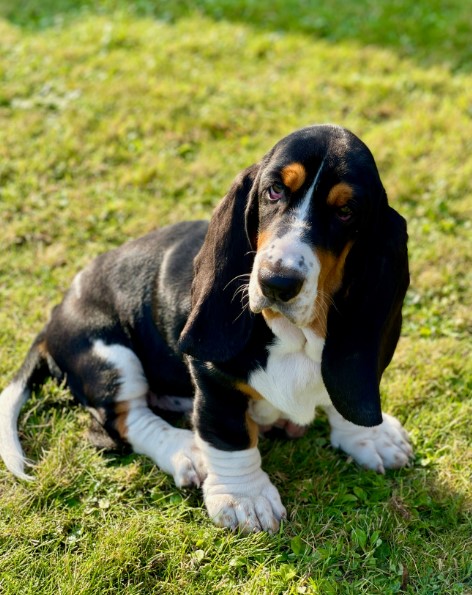
Temperament of a Black Basset Hound
There is no scientific evidence that coat color affects a dog’s personality. A black Basset behaves like any other Basset, and breed, genetics, early experiences, and training shape temperament far more than color does.
Gentle and Affectionate
Bassets are known for their loving nature. They bond closely with family members and often follow them from room to room, resting a heavy head on a knee or leaning against a leg.
Laid-Back and Calm
Indoors, most Bassets are relaxed and enjoy long naps. They suit homes that appreciate a calm, easygoing companion.
Stubborn and Independent
Bred to track scent trails alone, Bassets tend to make their own decisions. This independence can look like stubbornness. They are intelligent, but they follow instructions best when they see a reward.
Social and Pack-Oriented
Bassets generally enjoy company, whether human or canine. They often do well with children and other dogs, and they dislike being left alone for long periods.
Vocal
Bassets bark, howl, and bay. Their deep, musical voices carry a long way, which is worth considering if you live in close quarters.
Food-Driven
A Basset’s appetite is famous. This can make training easier, but it also creates a constant risk of weight gain and food theft.
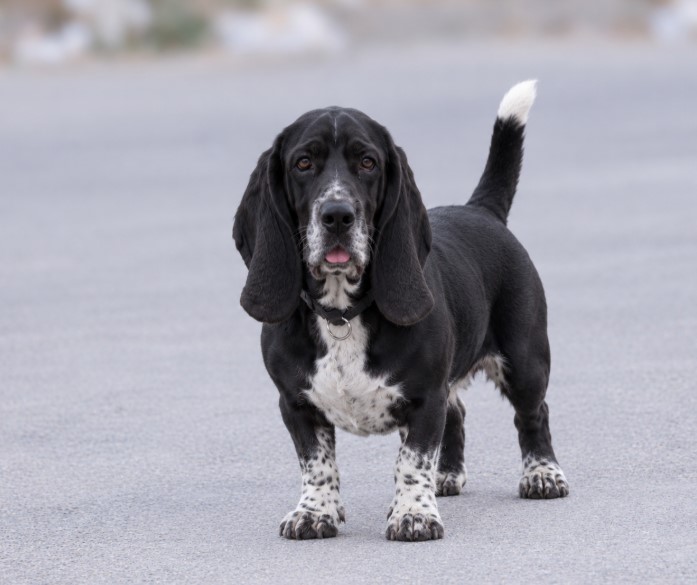
Training a Black Basset Hound
Training is the same for every Basset regardless of color, and it succeeds when you work with the breed’s instincts.
Use Positive Reinforcement
Treats, praise, and play work far better than corrections. Harsh methods tend to make Bassets shut down or become more stubborn.
Keep Sessions Short
Five to ten minutes at a time keeps a hound interested. End on a success.
Be Consistent
Everyone in the household should use the same cues and rules. Mixed messages slow progress.
Teach Essential Skills
- House training: Often takes longer than with some breeds. Use a firm schedule, close supervision, and rewards.
- Leash walking: Use a harness, and reward loose-leash walking. Allow supervised sniffing breaks.
- Recall: Practice in secure places. Do not rely on it near roads.
- Leave it: Vital for a dog that scavenges.
- Quiet: Reward silence to manage baying.
Socialize Early
Introduce puppies to different people, places, sounds, and surfaces in a positive way during their first months. Socialization builds a confident, adaptable adult.
Exercise and Enrichment
Black Bassets have the same moderate energy as other Bassets. Daily exercise should include:
- One or two moderate walks, with plenty of time to sniff
- Scent games, such as hiding treats around the house or yard
- Puzzle feeders and snuffle mats
- Gentle play in a fenced area
Avoid intense running, repeated jumping, and long stair climbing, especially in puppies, since the long back and heavy front end put stress on the spine and joints. Keep your dog on a leash or in a securely fenced area at all times. A strong scent can pull a Basset far from home before you realize it.
A Note on Heat
Dark coats absorb more heat from sunlight than light coats. A black Basset may get warm faster on sunny days, which matters in hot climates. Exercise early in the morning or in the evening, provide shade and fresh water, and never leave your dog in a parked car. Heavy-bodied, short-muzzled-ish hounds can struggle in high heat, so watch for heavy panting, drooling, weakness, or collapse, and seek veterinary help if they appear.
Feeding and Weight Control
Obesity is one of the biggest health threats to Bassets. Excess weight strains the back and joints and can shorten life.
- Feed a complete and balanced food suited to your dog’s age and activity level.
- Measure meals. Avoid free feeding.
- Feed adults twice daily, and puppies three to four smaller meals.
- Use a slow feeder to prevent gulping.
- Count treats as part of daily calories.
- Check body condition. You should be able to feel the ribs under a thin layer of fat.
- Avoid hard exercise right after meals, since deep-chested dogs can suffer from bloat (gastric dilatation-volvulus). Learn the signs: swollen belly, unproductive retching, restlessness, and drooling. This is an emergency.
Grooming a Black Basset Hound
Black coats are easy to care for, though a few points are worth noting.
Brushing. Brush weekly with a rubber curry brush or grooming mitt. Bassets shed year-round, and loose hair shows up clearly on light furniture and clothing. Frequent brushing helps.
Bathing. Bathe every month or two, or when the dog is dirty or smelly, using a gentle shampoo. Over-bathing can dry the skin.
Coat sheen. A healthy diet and regular brushing keep a black coat glossy. Dullness, flaking, or hair loss can signal skin problems or nutrition issues, so mention them to your vet.
Skin checks. On a dark coat, redness, rashes, or small parasites like ticks and fleas can be harder to spot. Part the hair and check the skin regularly, especially in warm weather and after outdoor walks.
Skin folds. Clean and dry the wrinkles on the face and body to prevent irritation and odor.
Ears. Long ears trap moisture and wax, making infections common. Check weekly for redness, odor, or discharge, and clean with a vet-approved solution. Do not insert cotton swabs deep into the canal.
Eyes. Wipe away debris and watch for redness or discharge.
Nails and teeth. Trim nails every few weeks, and brush teeth regularly with dog-safe toothpaste.
Health Concerns
Coat color does not make a Basset more or less healthy. Dogs of every color share the breed’s typical health risks.
Ear Infections
Among the most common problems. Regular cleaning and prompt treatment are important.
Intervertebral Disc Disease (IVDD)
The long back puts stress on the spine. Signs include pain, reluctance to move, weakness, or wobbliness. It requires urgent veterinary care.
Hip and Elbow Dysplasia
Abnormal joint development can cause lameness and arthritis. Responsible breeders screen their dogs.
Obesity
Closely tied to joint and spine problems. Keep your dog lean.
Bloat (GDV)
A life-threatening emergency in deep-chested dogs.
Eye Conditions
Examples include glaucoma and eyelid abnormalities such as ectropion and entropion.
Skin Problems
Skin folds and allergies can lead to infections and irritation.
Inherited Blood and Immune Disorders
Some lines of Basset Hounds are known to carry specific inherited conditions, such as certain platelet function disorders. A reputable breeder can explain which tests they use.
Lifespan
Most Basset Hounds live about 10 to 12 years. A healthy weight, good nutrition, preventive care, and protection of the back and joints support a longer, more comfortable life.
Preventive Care
- Keep vaccinations current
- Use flea, tick, and heartworm prevention as your vet advises
- Microchip your dog
- Schedule regular check-ups
- Discuss spay or neuter timing with your vet
- Consider pet insurance or an emergency fund
Buying or Adopting a Black Basset Hound
Be Skeptical of “Rare Color” Claims
Breeders sometimes market unusual colors as rare and charge more. For Basset Hounds, color should never be the deciding factor. Ask whether a puppy advertised as black is a purebred, what the parents look like, and whether the breeder provides registration papers and health testing.
What a Responsible Breeder Does
- Health-tests both parents and shares the results
- Lets you meet the mother and see the puppies’ living conditions
- Provides vaccination and deworming records
- Offers a written contract and health guarantee
- Asks you questions about your home and lifestyle
- Will take the dog back at any time in its life
Consider Rescue
Basset Hound rescues exist in many regions and often have dogs of all colors, including dark tricolors. Adoption fees are usually lower, and rescue staff can describe each dog’s personality. If you are not set on a puppy, this can be an excellent path.
Watch for Mixes
If a dog is sold as a “black Basset” but looks unusual, such as a longer muzzle, a broader chest, or a very different body shape, it may be a mix. Mixes can be wonderful pets, but you should know what you are getting, particularly where size and health are concerned.
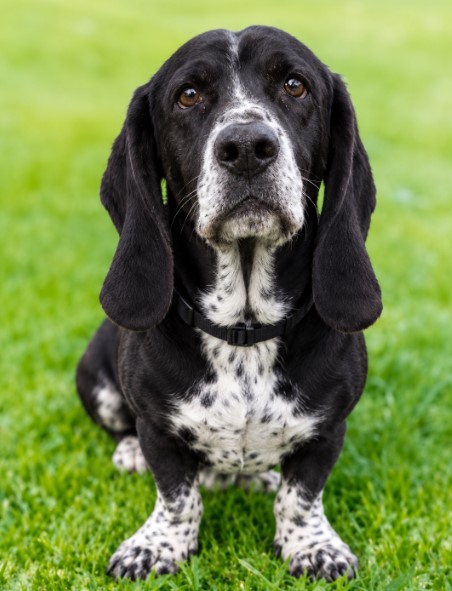
Is a Black Basset Hound Right for You?
A Good Fit If You:
- Want a gentle, affectionate, and funny companion
- Can commit to patient, reward-based training
- Enjoy slow, sniff-heavy walks
- Have a secure yard or reliable leash habits
- Are home often or can arrange company for the dog
- Can manage drool, shedding, and a bit of hound odor
Think Twice If You:
- Want a dog that obeys instantly off leash
- Need a quiet dog for thin-walled housing
- Are away for long hours every day
- Want an athletic running partner
- Cannot lift a heavy dog or manage stairs easily
Frequently Asked Questions
Conclusion
A black Basset Hound is a striking dog, with dark, glossy coloring that highlights those long ears and wrinkled, soulful face. But the most important thing to know is that color is only skin deep. Solid black Bassets are extremely rare, and most dark Bassets are tricolors or have black and white or black and tan patterns. Whatever the coat, the dog underneath is the same loyal, stubborn, affectionate scent hound that has charmed families for generations.
If you are drawn to a black Basset, focus on what matters: a responsible breeder or rescue, proper health testing, early socialization, positive training, careful feeding, regular ear and skin care, and protection of the back and joints. Do not pay extra for the label “rare,” and do not let color override judgment about health and temperament.