
Basset Hound Puppies (2026): The Complete Guide to Choosing, Raising, and Loving This Droopy-Eared Charmer
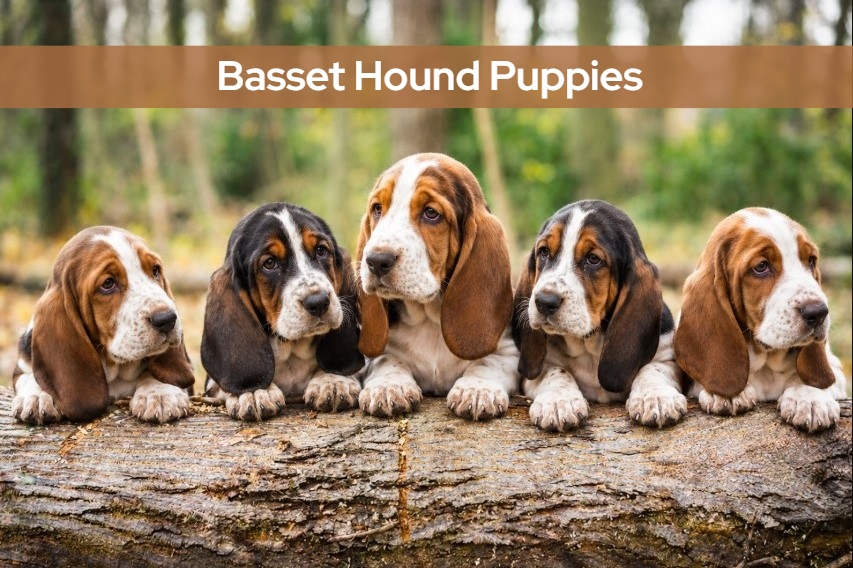
If there is one dog that can melt a heart with a single sideways glance, it is the Basset Hound puppy. The furrowed brow, the sorrowful, soulful eyes, the long, velvety ears, and the swaying walk of a body that appears a little too long for its legs all come together to form an irresistible package. But behind the comic looks is a dog with a rich history, a world-class nose, a stubborn streak, and very specific needs.
This guide covers what it is like to bring a Basset Hound puppy home: where the breed came from, what to expect at each stage of growth, how to feed, train, groom, and protect your puppy’s health, and how to decide whether this breed fits your life. You will also find a detailed FAQ section and a conclusion to help you make a confident decision.
Discover the unique beauty and characteristics of the Black Basset Hound and learn what makes this breed so special.
Where the Basset Hound Comes From
The Basset Hound’s story starts in France. The name comes from the French word bas, meaning “low,” a reference to the breed’s short stature. The breed is generally traced to monastery-bred hounds descended from the legendary St. Hubert hound, an ancestor of the modern Bloodhound. Hunters wanted a dog that could follow a scent slowly and deliberately through dense undergrowth, a pace that allowed hunters on foot to keep up. A low, heavy-boned dog with a superb nose was ideal for tracking rabbits and hares.
Over the centuries, breeders in France and later in England refined the type. English breeders crossed the French hounds with Bloodhounds to strengthen scenting ability and add the wrinkled skin and long ears that define the breed today. The Basset Hound arrived in North America in the nineteenth century and gained popularity through dog shows, advertising, and television, becoming one of the most recognizable breeds in the world.
Understanding this heritage matters when you raise a puppy. A Basset is not a short-legged lapdog.. It is a scent hound built to work independently, follow its nose for hours, and ignore distractions. Almost every quirk you will meet, from selective hearing to dramatic sniffing detours on walks, traces back to this working past.
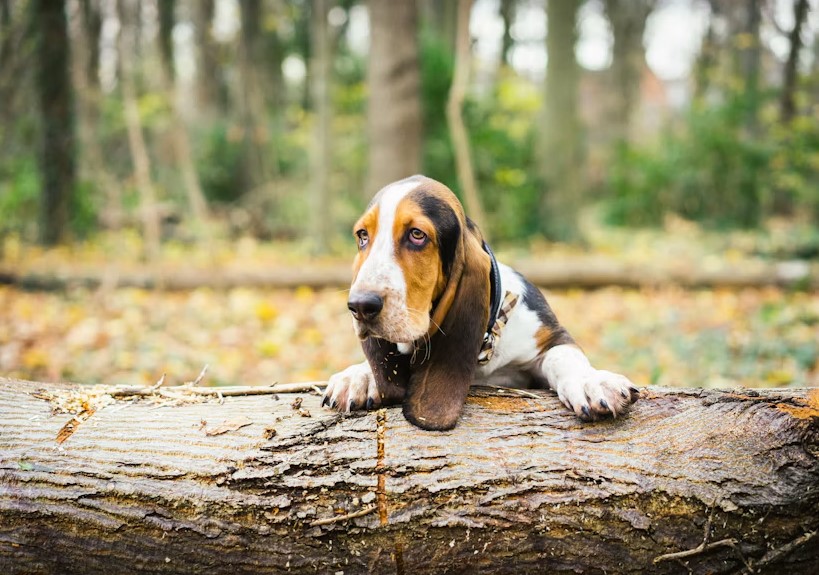
Basset Hound Breed Snapshot
Here is a brief summary of the adult breed your puppy will become before we go any further:
- Height: Roughly 11 to 15 inches at the shoulder
- Weight: Typically 40 to 65 pounds, with some individuals heavier
- Lifespan: Around 10 to 12 years
- Coat: Short, smooth, and dense, in tricolor, red and white, lemon and white, and other hound color combinations
- Temperament: Gentle, affectionate, easygoing, stubborn, and food-motivated
- Energy: Moderate; calm indoors, persistent outdoors
- Trainability: Intelligent but independent, so patience is essential
Basset Hounds are heavy for their height. Their dense bones and long bodies mean a medium-height dog can feel surprisingly weighty when you lift it, which is something to keep in mind as your puppy grows.
Check Also: Basset Hound Characteristics
What Makes a Basset Hound Puppy Unique
The Nose
A Basset Hound’s sense of smell is often described as second only to the Bloodhound’s. Hounds carry hundreds of millions of scent receptors, compared with roughly five million in a human. For a puppy, this means the world is a library of fascinating information. A walk around the block is less a stroll than a reading session. Your puppy will pause at every blade of grass and tug toward interesting trails. This is normal and healthy, and it should be channeled rather than suppressed.
The Ears
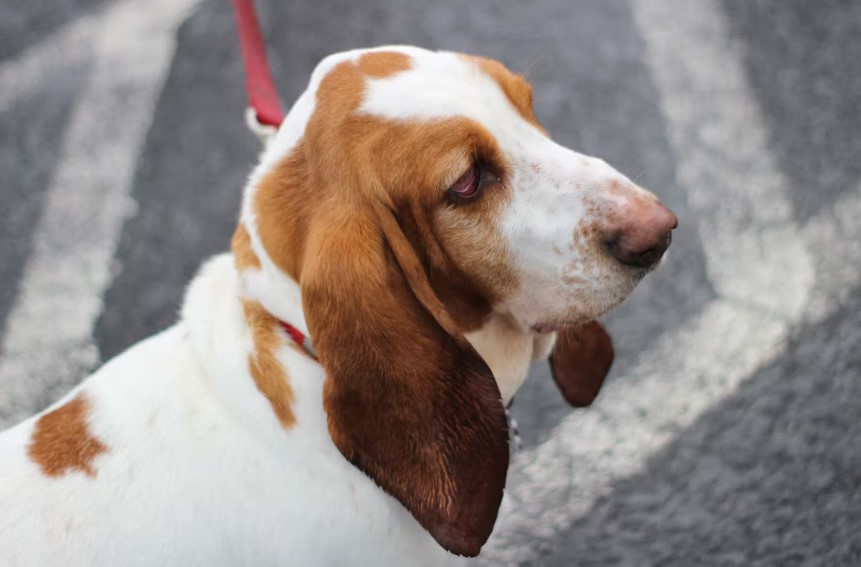
Those long, low-set ears are not just for show. The popular theory is that they sweep scent particles toward the nose as the dog follows a trail. They also drag in water bowls, collect food, and trap moisture and wax, which makes ear care a major part of Basset ownership.
The Body
The long back, deep chest, and short, sturdy legs give the breed its silhouette, and they also create specific health considerations, especially for the spine and joints. Puppies grow into this body gradually, which means they can look awkward and clumsy for months. Protecting a growing puppy’s spine and joints is one of the most important responsibilities of an owner.
The Voice
Bassets have a deep, melodic bay that seems far too big for their bodies. Puppies may begin practicing this early, and some are quite talkative. If you live in an apartment or close to neighbors, plan for early training in quiet behavior.
Temperament: What Is a Basset Puppy Really Like?
Ask Basset owners to describe their dogs and you will hear similar words: sweet, laid-back, funny, loyal, and occasionally exasperating.
Affectionate and social. Bassets were bred to work in packs, so they tend to love company, both human and canine. A Basset left alone for long hours can become bored, destructive, or noisy. They generally get along well with children, other dogs, and even cats when properly introduced.
Easygoing but determined. Puppies play hard in short bursts and then collapse into long naps. Adults are famous for their couch-potato tendencies. When something smells interesting, however, that relaxed dog can become remarkably single-minded.
Stubborn, not dumb. This is the most common misunderstanding about the breed. Bassets are intelligent, but they were bred to make decisions on their own while tracking. They do not obey simply to please you. They respond when they understand what is in it for them, which usually involves a treat.
Food-driven. A Basset’s appetite is legendary. This helps in training but also creates a risk of obesity, counter-surfing, and sneaky theft.
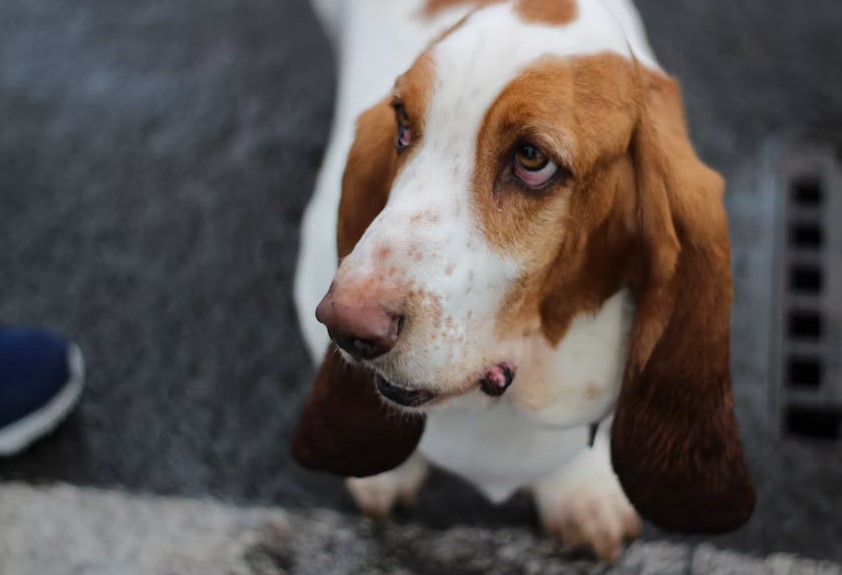
Finding a Basset Hound Puppy: Breeder, Rescue, or Adoption?
Choosing a Reputable Breeder
A good breeder is your best protection against heartbreak and avoidable medical bills. Look for a breeder who:
- Performs and shares health screening on both parents, which may include evaluations of hips, elbows, eyes, and breed-relevant blood tests
- Raises puppies in a clean, social home environment
- Lets you meet the mother and, if possible, the father
- Asks you detailed questions about your home and lifestyle
- Provides a written contract, health guarantee, and first vaccination and deworming records
- Is willing to take the dog back at any point in its life
- Does not always have puppies available and often keeps a waiting list
Be cautious of anyone who sells puppies online with no questions asked, offers several breeds at once, pushes you to pay a deposit quickly, or will not let you visit. Prices vary widely by region and bloodline, but well-bred puppies from health-tested parents commonly cost somewhere in the range of several hundred to a couple of thousand dollars. A suspiciously low price is often a warning sign rather than a bargain.
Considering Rescue
Basset Hound rescue groups exist in many countries and regularly take in young dogs and puppies, along with adults surrendered because their owners underestimated the breed’s needs. Adoption fees are generally lower, dogs are usually vet-checked and vaccinated, and rescue staff can tell you a lot about each dog’s personality. If you are flexible about age, rescue can be a wonderful way to find a Basset.
Questions to Ask Before You Commit
Ask yourself honestly:
- Can I handle drool, shedding, and a dog with a distinctive “hound” smell?
- Do I have time for patient, consistent, reward-based training?
- Can I manage a heavy dog on stairs, or lift 50 or more pounds when needed?
- Is my yard securely fenced? A Basset will follow its nose right out an open gate.
- Am I ready for a 10 to 12 year commitment?
Choosing the Right Puppy From the Litter
When you visit a litter, spend time observing. Healthy puppies should have:
- Clear, bright eyes without excessive discharge
- Clean ears that do not smell yeasty or sour
- A plump but not bloated belly
- A clean coat, free of fleas, bald patches, or irritated skin
- Steady, curious movement
- Straight, sturdy legs with no obvious limping
Temperament matters too. A very shy puppy that hides in a corner may need extra socialization, and an overly pushy puppy may be a handful. Many owners do well with a middle-of-the-road puppy that is curious, friendly, and recovers quickly from small surprises. A good breeder will help match you with the puppy that suits your family.
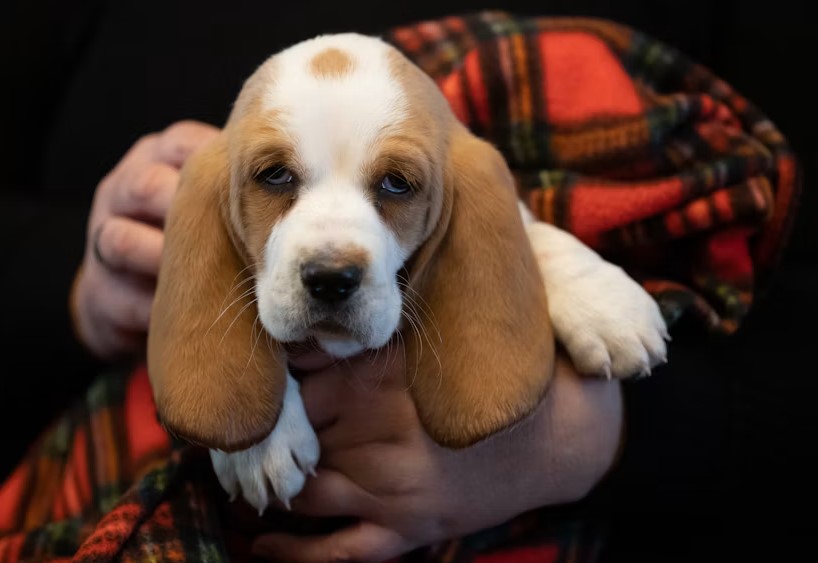
Most puppies should stay with their mother and littermates until at least eight weeks of age. Those early weeks teach bite inhibition, canine manners, and confidence that are hard to replace.
Preparing Your Home Before the Puppy Arrives
Puppy-proofing a Basset-friendly home is similar to puppy-proofing for any dog, with a few hound-specific twists.
Create a safe zone. Set up a crate and a small exercise pen in a quiet part of the house. The crate should be large enough for the puppy to stand, turn around, and lie down, but not so large that it becomes a toilet corner.
Block stairs and high furniture. Basset puppies should not repeatedly jump on and off furniture or climb stairs, since their long spines and heavy front ends are vulnerable. Use baby gates, add ramps or steps beside the couch, and carry the puppy when needed, supporting both front and back ends.
Secure food and trash. A Basset’s nose will find anything edible. Use latching bins, keep counters clear, and store pet and human food in closed containers.
Remove hazards. Cover electrical cords, remove toxic houseplants, and put away shoes, socks, and small objects that could be swallowed.
Gather supplies. Useful items include:
- A sturdy crate and soft, washable bedding
- Heavy, stable food and water bowls (or a bowl designed for long-eared dogs)
- A well-fitted harness and a lightweight leash
- A flat collar with an ID tag
- Chew toys, snuffle mats, and puzzle feeders
- A soft brush or rubber grooming mitt
- Ear cleaner approved by your vet
- Enzymatic cleaner for accidents
- Puppy training treats in tiny pieces
The First Days at Home
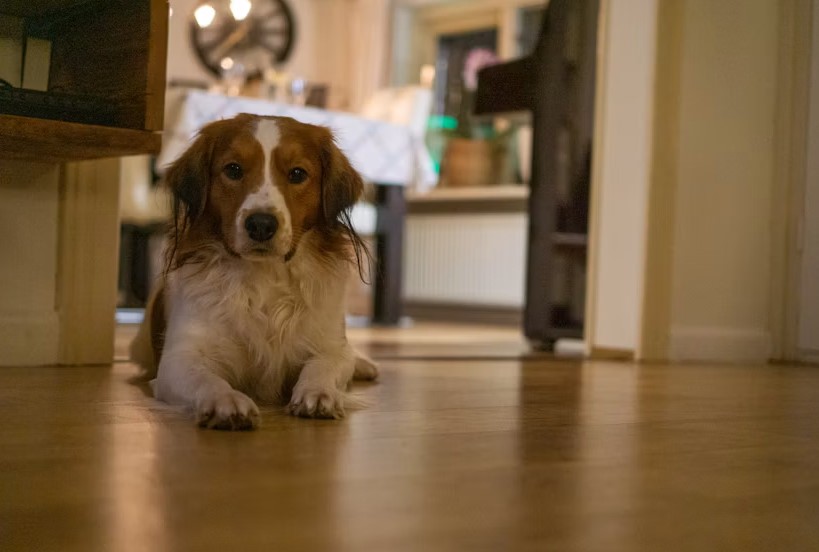
Your puppy’s first night will probably be the most emotional. Leaving the litter is a big change, and whining is common. Keep the routine simple:
- Stay calm. Bring the puppy home on a quiet day when someone can be around.
- Show the potty spot first. Carry your puppy directly to the chosen outdoor area before entering the house.
- Set a schedule right away. Regular times for meals, sleep, play, and potty breaks help puppies settle.
- Keep visitors limited. Allow friends and family to meet the puppy gradually so it does not become overwhelmed.
- Make the crate pleasant. Feed meals in the crate and offer treats and chews there. A soft blanket that smells like the litter can be comforting.
Expect to take your puppy outside every couple of hours, plus after meals, naps, and play, and perhaps once during the night at first.


Growth and Development: Stage by Stage
8 to 12 Weeks
At this age puppies are tiny, wobbly, and sleep most of the day. This is the prime window for gentle socialization. Introduce your puppy to different sounds, surfaces, people, and, once your vet agrees, safe, vaccinated dogs. Start short training sessions with simple cues like name recognition, sit, and coming when called.
3 to 4 Months
Growth picks up. Teething starts, and the puppy may chew everything within reach. Provide plenty of appropriate chew toys and keep an eye on those long ears, which now seem to land in every food bowl.
4 to 6 Months
Your puppy is gaining weight steadily and may begin to test boundaries. You might see “selective hearing” for the first time. Keep training positive and consistent. This is also a good time to talk with your vet about spay or neuter timing, since recommendations vary and can depend on the individual dog.
6 to 12 Months
Adolescence has arrived. The puppy may seem to forget its training, chase scents more intensely, and show more independence. Stay consistent, keep the leash on, and keep rewarding good decisions.
12 to 24 Months
The Basset Hound continues to fill out and mature. Many dogs reach full height by around a year but keep gaining muscle and bulk for longer. Mentally, many Bassets mellow in their second or third year.
Feeding Your Basset Hound Puppy
Nutrition in puppyhood sets the foundation for long-term health, and Bassets are prone to weight gain, so how you feed matters.
Choose a quality puppy food. Look for a complete and balanced formula suited to a medium-sized breed, with a named animal protein as a main ingredient. Your vet or breeder can recommend a brand. Avoid constantly switching foods, since sudden changes can cause digestive upset.
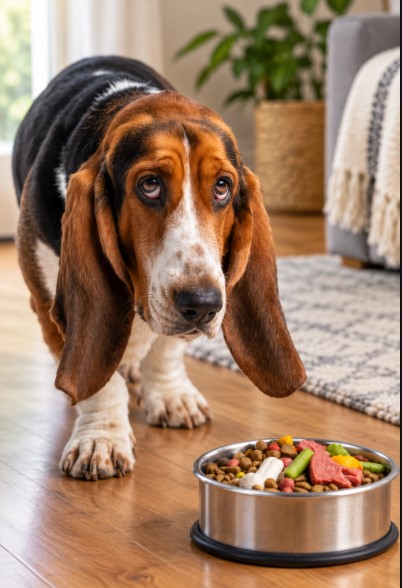
Feed measured meals. Puppies commonly eat three to four small meals a day at first, moving to two meals as they mature. Do not leave food out all day. Measuring portions with a scale or measuring cup helps you control calories.
Slow down fast eaters. Bassets often gulp their food. A slow-feeder bowl or puzzle feeder reduces gulping, and breaking up meals can lower the risk of digestive trouble.
Watch for bloat risk. Deep-chested breeds can suffer from gastric dilatation-volvulus (GDV), a life-threatening emergency in which the stomach twists. Avoid vigorous exercise right before and after meals, and learn the warning signs: a swollen belly, unproductive retching, restlessness, and drooling. If you suspect bloat, go to an emergency vet immediately.
Use treats wisely. Treats are valuable training tools, but they add up. Use small pieces, and count them as part of the daily calorie allowance. Many owners use a portion of the puppy’s daily kibble as training rewards.
Keep your puppy lean. You should be able to feel the ribs under a thin layer of fat. Excess weight puts extra strain on the spine and joints, and it can shorten a dog’s life.
Provide fresh water. Keep a clean bowl available at all times, and wipe the ears and jowls after drinking if they get soaked.
House Training a Basset Hound Puppy
Many owners report that Bassets take longer than some breeds to become fully reliable. Their independent minds and small bladders as puppies mean patience and routine are your best tools.
Use a consistent schedule. Take your puppy out first thing in the morning, after meals, after naps, after play, and before bed. Take the puppy to the same spot each time, say a cue phrase, and reward immediately after it eliminates.
Supervise closely. When the puppy is loose in the house, watch for sniffing, circling, or wandering off, which usually signals the need to go. When you cannot watch, use the crate or pen.
Never punish accidents. Scolding teaches a puppy to hide rather than to go outside. Clean the area thoroughly with an enzymatic cleaner and move on.
Be patient with weather. Some Bassets dislike rain or cold. A covered potty area, a short leash, and a lot of praise can help.
Most puppies are mostly reliable somewhere between four and six months, but accidents can continue for longer in some dogs. Consistency pays off.
Training Your Basset Hound Puppy
Start Early, Keep It Positive
Training a Basset Hound is a lesson in motivation. Harsh corrections tend to make the dog shut down or become more stubborn. Reward-based methods using treats, praise, and play work far better.
Keep Sessions Short
Puppies have short attention spans. Several sessions of five minutes a day are better than one long one. End on a success while the puppy is still interested.
Core Skills to Teach
- Name response. Say the name, reward when the puppy looks at you.
- Sit, down, and stay. Use a treat to lure each position, then add the cue word.
- Come. A reliable recall is hard with a hound. Practice indoors and in secure areas, make coming to you the best thing ever, and never call the puppy to punish it.
- Leash manners. Teach the puppy to walk beside you rather than pulling. Allow sniffing breaks as a reward for loose-leash walking.
- Leave it. This is essential for a food-driven dog with a nose that finds everything.
- Quiet. Reward silence after barking or baying, rather than yelling.
A Word About Off-Leash Freedom
Even a well-trained Basset should be kept on a leash or in a secure fenced area. A strong scent can override all training, and a dog with its nose to the ground is not watching for traffic. Never rely on recall alone near roads.
Puppy Classes
A well-run puppy class offers socialization, structure, and professional guidance. Look for trainers who use positive methods and check that the class requires vaccinations.
Socialization: Raising a Confident Dog
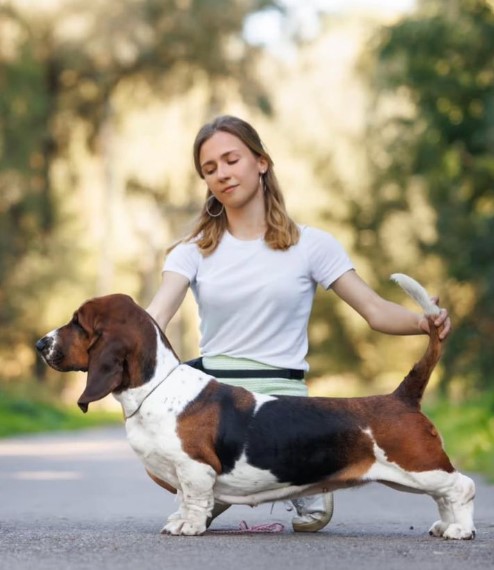
Socialization is the process of safely exposing your puppy to new people, places, sounds, and experiences so that it grows up calm and confident. The key window is roughly the first three to four months of life, though learning continues afterward.
Introduce your puppy gradually to:
- Men, women, children, and people wearing hats, sunglasses, or uniforms
- Household noises like vacuums, doorbells, and hair dryers
- Car rides, short and positive at first
- Different surfaces such as tile, grass, gravel, and carpet
- Other friendly, vaccinated dogs
- Handling of paws, ears, mouth, and tail, which makes grooming and vet visits easier
Make each experience positive with treats and praise. If the puppy seems frightened, increase the distance and let it approach at its own pace. Do not force interactions.
Exercise Needs
Basset Hound puppies have bursts of energy, but they are not marathon runners. Because their joints and spines are developing, exercise should be moderate and controlled.
- Short, frequent walks are better than long, strenuous ones. A common rule of thumb is about five minutes of structured exercise per month of age, up to twice a day, though your vet can advise on what suits your puppy.
- Avoid forced running, jumping, and long stair climbs during the growth period.
- Let the nose work. Sniff walks, scent games, and hiding treats around the yard provide both mental and physical exercise.
- Offer play at home. Gentle tug, fetch in a hallway, and puzzle toys are great.
- Swimming is not their strength. With heavy bones and short legs, many Bassets are poor swimmers. If you introduce water, use a life vest and supervise closely.
Mental stimulation matters just as much. A bored Basset may dig, howl, or chew, so a snuffle mat, a food-dispensing toy, or a simple scent game can prevent trouble.
Grooming and Care
Bassets have a short coat that is easy to maintain but do require some regular care.
Coat. Brush weekly with a rubber curry or a soft bristle brush to remove loose hair. Bassets do shed, and shedding is heavier during seasonal changes. Bathe every month or two, or when dirty, using a gentle dog shampoo. Over-bathing can dry the skin.
Skin folds. The wrinkles on the face, lips, and body can trap moisture and debris. Wipe them gently with a soft, damp cloth and dry thoroughly to prevent irritation and odor.
Ears. This is the most important grooming task. Inspect the ears weekly for redness, odor, discharge, or excess wax. Clean with a vet-approved ear cleaner as directed. Do not use cotton swabs deep in the ear canal. If the ears smell sour, look red, or your puppy scratches or shakes its head often, see your vet.
Eyes. Some Bassets have droopy lower eyelids that can collect dirt. Wipe away discharge gently and ask your vet if you see persistent redness or irritation.
Nails. Because Bassets are low to the ground, long nails can change how they walk and strain the toes. Trim every few weeks and get your puppy used to the process early.
Teeth. Start brushing teeth early with a dog-safe toothpaste. Dental disease is common in dogs and can affect overall health.
Drool. Keep a cloth handy. Bassets drool, especially around food and water, and the mess is part of the breed’s charm.
Basset Hound Puppy Health: What Owners Should Know
Most Bassets live healthy, happy lives, but the breed is predisposed to certain conditions. Knowing them lets you catch problems early.
Common Concerns
- Ear infections. Long, heavy ears limit airflow and trap moisture. Regular cleaning and prompt treatment are essential.
- Obesity. Overweight Bassets have a higher risk of back and joint problems and other health issues.
- Intervertebral disc disease (IVDD). The long back puts the spine under stress. Signs include pain, reluctance to move, weakness, or wobbliness in the back legs. Veterinary attention is urgent.
- Hip and elbow dysplasia. These joint conditions can cause lameness and arthritis. Responsible breeders screen for them.
- Bloat (GDV). As noted earlier, this is a medical emergency in deep-chested breeds.
- Eye conditions. Examples include glaucoma, ectropion, and entropion, which involve eyelid or eye pressure issues.
- Skin problems. Folds and allergies can lead to infections and irritation.
- Inherited blood and immune disorders. Basset Hounds are known to have some breed-specific conditions, such as certain platelet function disorders, and some lines have had immune system conditions. A reputable breeder can discuss which tests apply to their breeding dogs.
Preventive Care
- Vaccinations. Puppies typically receive a series of core vaccines starting at around six to eight weeks, with boosters every few weeks until about 16 weeks, plus rabies at the appropriate age. Your vet will set a schedule based on local risks.
- Deworming. Puppies are often born with intestinal parasites, so routine deworming is standard.
- Parasite prevention. Flea, tick, and heartworm prevention should be started on your vet’s advice.
- Microchipping. Hounds that follow scents can wander far. A microchip and ID tag greatly improve the chance of a safe return.
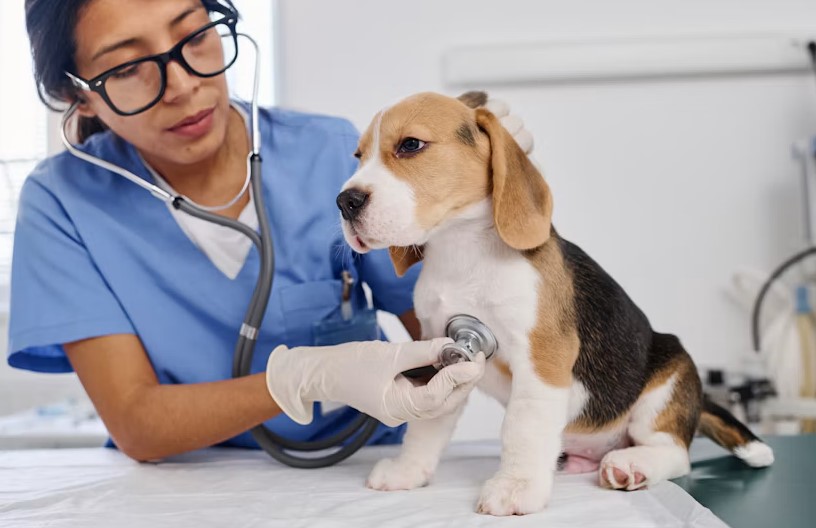
- Regular check-ups. Annual or more frequent exams help catch problems early.
- Spay or neuter. Discuss the right timing with your vet, as it may depend on your dog’s size, health, and lifestyle.
Pet Insurance
Because the breed is prone to costly conditions such as disc disease and ear problems, many owners consider pet insurance or a dedicated savings fund. Compare policies carefully, noting exclusions, waiting periods, and pre-existing condition rules.
Protecting a Basset Puppy’s Back and Joints
Since back and joint health is so central to the breed, it deserves its own section. Simple daily habits make a big difference:
- Control weight. This is the single most important protective factor.
- Lift correctly. Support the chest and hindquarters at the same time, keeping the spine horizontal. Do not lift by the front legs or scoop from under the front end alone.
- Limit stairs and jumping. Use ramps, steps, or gates, especially during growth.
- Provide traction. Slippery floors make joints work harder. Use rugs or runners in key areas.
- Use a harness, not just a collar. Pulling against a collar can strain the neck. A comfortable harness spreads the pressure.
- Build gentle muscle. Controlled walking and gentle play develop strength and support the spine.
Living With a Basset Hound Puppy: Daily Life
Noise
Expect some howling and baying. Early training, enough exercise, and avoiding long periods of loneliness can reduce excessive vocalizing. Consider your neighbors before bringing home a hound.
Digging and Chewing
Puppies chew, and some Bassets dig. Provide appropriate chews, a sandbox area if you like, and plenty of supervision.
Escaping
Bassets are not usually jumpers, but they are excellent diggers and sniffers. Check fences for gaps and weak spots, and never leave a puppy unattended in an unsecured yard.
Smell
Bassets have a naturally “houndy” scent, partly from oils in the skin and partly from folds and ears. Regular cleaning, quality food, and washing bedding frequently help keep odors under control.
Living With Children and Other Pets
Basset Hounds typically do well with children, but all interactions should be supervised. Teach kids to be gentle, never to pull ears or tail, and not to pick up the puppy without help. Because they were bred to hunt in packs, Bassets often enjoy other dogs. Introduce cats or small pets gradually, keeping in mind the breed’s prey drive.
Alone Time
Bassets do not like being alone for long periods. Build up to short absences gradually, provide toys, and consider a dog walker or daycare if your schedule keeps you away for long hours.
The Real Cost of Owning a Basset Hound Puppy
Budgeting for the initial purchase is only part of the picture. Plan for:
- Purchase or adoption fee
- Initial vet visits, vaccines, deworming, and microchip
- Supplies, including crate, bed, bowls, leash, harness, and toys
- Food, which increases as the puppy grows
- Training classes
- Grooming supplies and ear care products
- Routine vet care and preventive medications
- Pet insurance or an emergency fund
- Boarding or pet-sitting when you travel
- Spay or neuter surgery
Costs vary by country and region, so get local quotes and build a flexible budget. Setting aside money for unexpected veterinary care will make emergencies easier to handle.
Common Mistakes New Basset Owners Make
- Overfeeding. Those pleading eyes work, but extra treats lead to extra pounds.
- Skipping ear care. Small problems can turn into painful infections.
- Letting a puppy jump or climb stairs constantly. The long spine needs protection.
- Giving up on training too soon. Patience and consistency are what work with the breed.
- Trusting off-leash freedom. A scent can lead a hound far from home in seconds.
- Underestimating the loneliness factor. Isolated Bassets can become noisy and destructive.
- Buying from the wrong source. Skipping health testing and breeder research can lead to long-term trouble.
- Ignoring early socialization. The first months are crucial for lifelong confidence.
Is a Basset Hound Puppy Right for You?
A Basset Hound may be a great fit if you:
- Enjoy a relaxed, affectionate, slightly goofy companion
- Are willing to commit to patient, reward-based training
- Can provide daily moderate walks and mental stimulation
- Have a secure yard or reliable leash routines
- Are comfortable with drool, shedding, and a bit of canine perfume
- Want a dog that loves company and family life
You might want to reconsider if you:
- Want a dog that obeys instantly and reliably off leash
- Need a spotless home with no drool or dog smell
- Live in a place where barking and baying would cause problems
- Are away from home for most of the day
- Have mobility issues that would make lifting a heavy dog difficult
- Prefer an athletic running or hiking partner
Frequently Asked Questions About Basset Hound Puppies
Conclusion
A Basset Hound puppy is a mix of comedy, affection, stubbornness, and heart. With those soulful eyes, lopsided waddle, and unforgettable voice, it is easy to see why so many people fall in love with the breed. But success with a Basset comes from understanding what lies beneath the charm: a scent hound with a strong will, a long back that needs protection, ears that need regular care, and an appetite that needs careful management.
If you choose a puppy from a responsible breeder or rescue, puppy-proof your home, protect the spine, feed with care, train with patience and positivity, and keep up with veterinary and ear care, you will give your dog the best foundation for a long and happy life. In return, you will gain a loyal companion who greets you with a wagging tail, follows you from room to room, and turns even the most ordinary walk into an adventure of the nose.
Raising a Basset puppy asks for time, consistency, and a good sense of humor. For the right family, the reward is a loving, loyal friend and a house full of laughter, a little drool, and plenty of love.